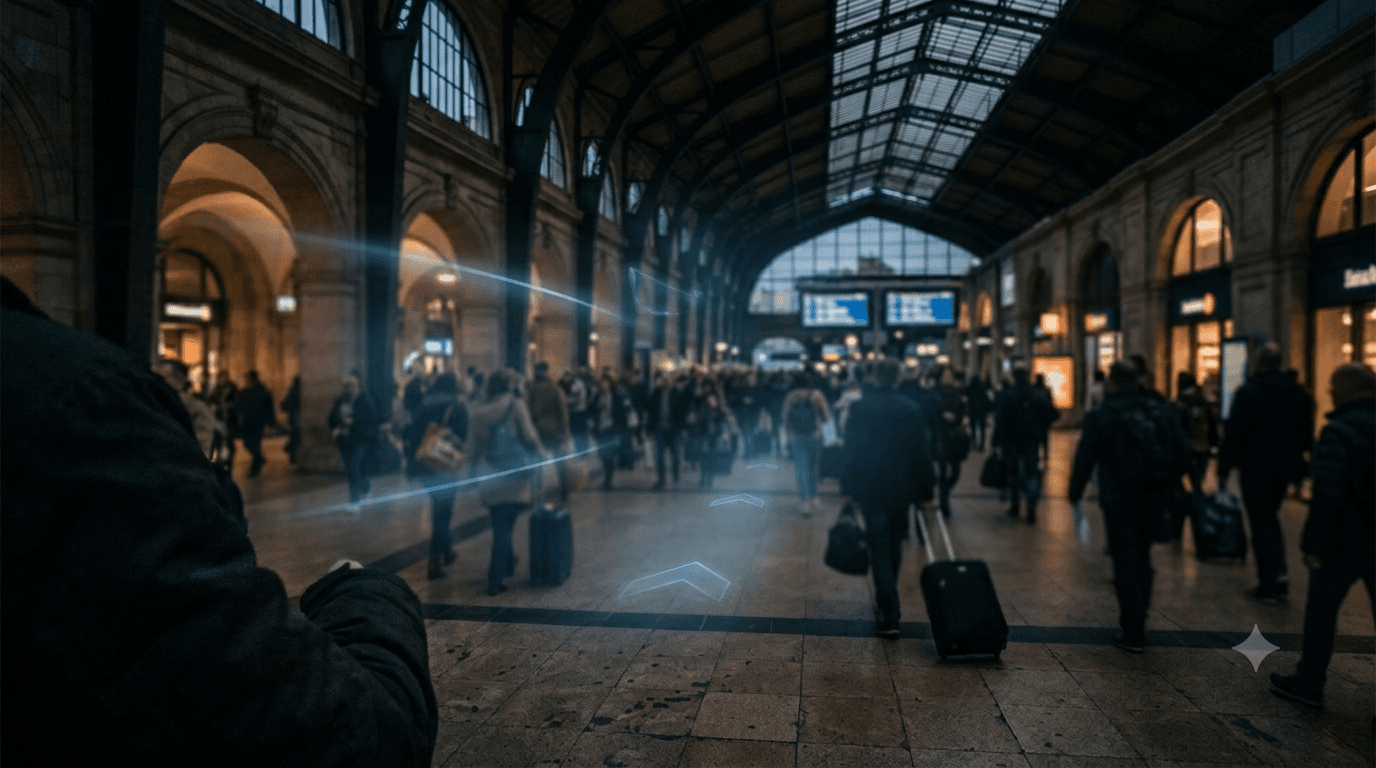
Transit is a maze.
We're the way through.
Pixel Pilot turns smart glasses into a navigation system. Say your destination, and a calm voice guides you through the station, onto the right train, off at the right stop.
Currently running on Meta Ray-Ban smart glasses, hardware flexible · Built at CDTM Munich

The problem
Maps stop at the station entrance.
From there, the station assumes you can see. Finding the correct platform, identifying the right train, locating the exit: every step becomes a challenge, and every challenge costs orientation, confidence and independence.
The solution
Say it. We guide you there.
Every question a traveller asks themselves in a station, answered by a calm voice in their ear.
“What's on that sign?”
Reads signs aloud
The glasses camera reads signage and displays, and speaks them to you.
“Where am I?”
Indoor positioning without GPS
Bluetooth beacons, map data and barometric sensors locate you underground, where GPS goes silent.
“Which way now?”
Turn-by-turn guidance
Station maps, signage and prerouting become simple spoken directions.
“Is this my train?”
Vehicle identification
Sign reading plus live timetables confirm it out loud before you board.
“Can I just ask?”
Hands-free conversation
Ask mid-journey and get a short spoken answer, right in your ear.
“Do I need to hold anything?”
All of it by voice
Nothing to look at, nothing to hold. The phone stays in your pocket.
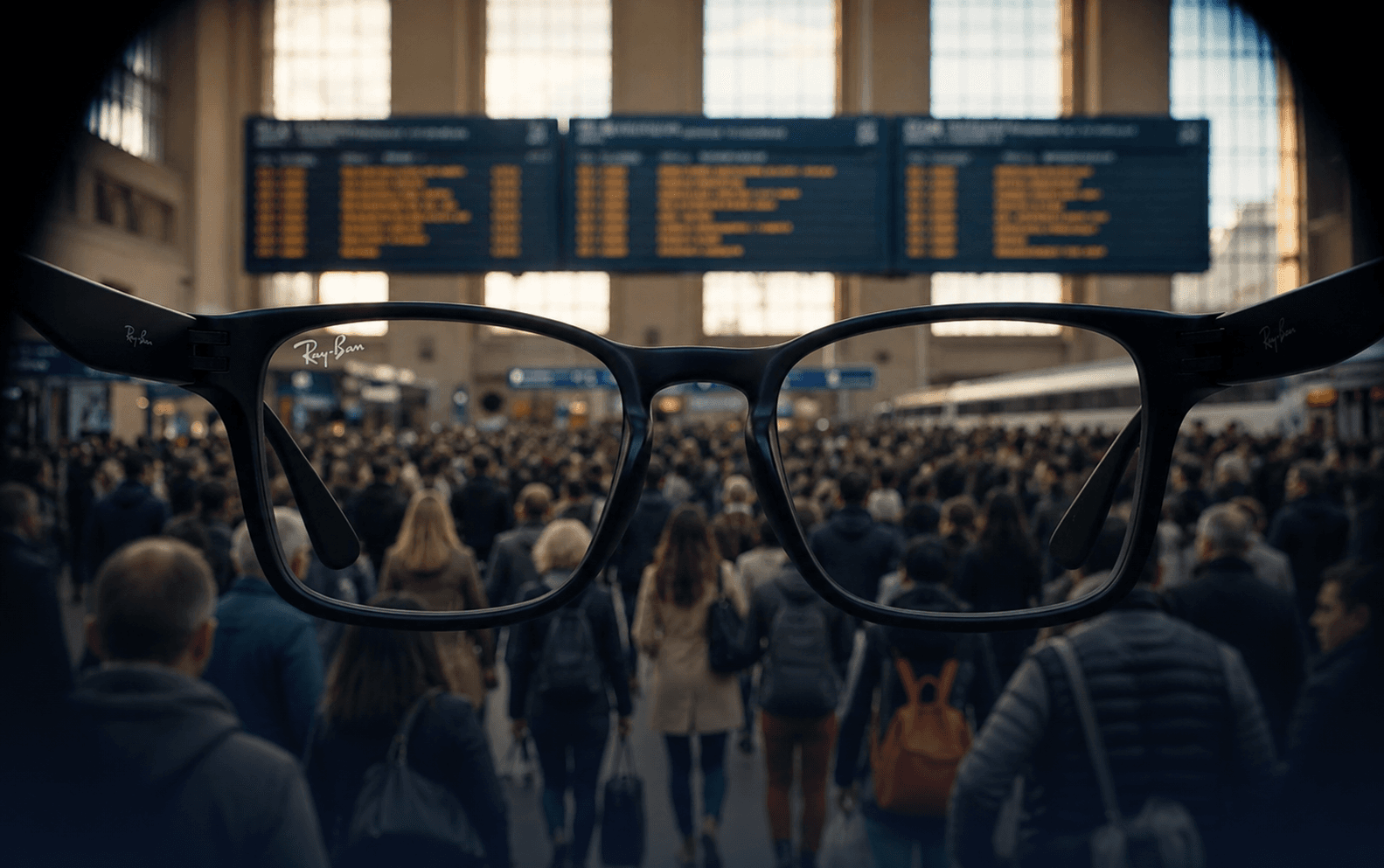 What the user seesWhat Pixel Pilot sees
The hardware
No device. No stigma.
Just glasses.
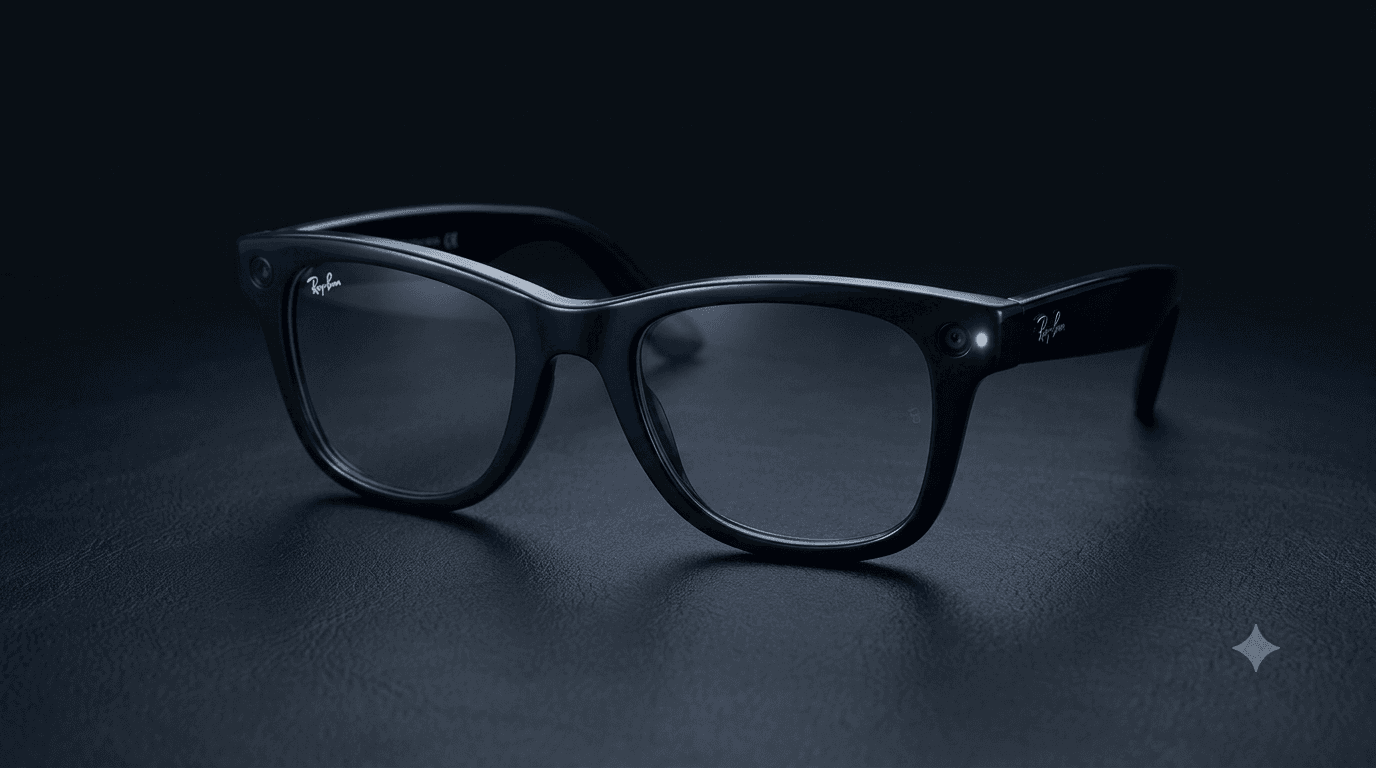
Pixel Pilot currently runs on Meta Ray-Ban smart glasses: camera in, audio out. Mainstream frames people already love to wear, not a medical gadget.
And the hardware is flexible by design. As smart glasses evolve, Pixel Pilot moves with them.
Who it's for
With the cane.
Or without it.
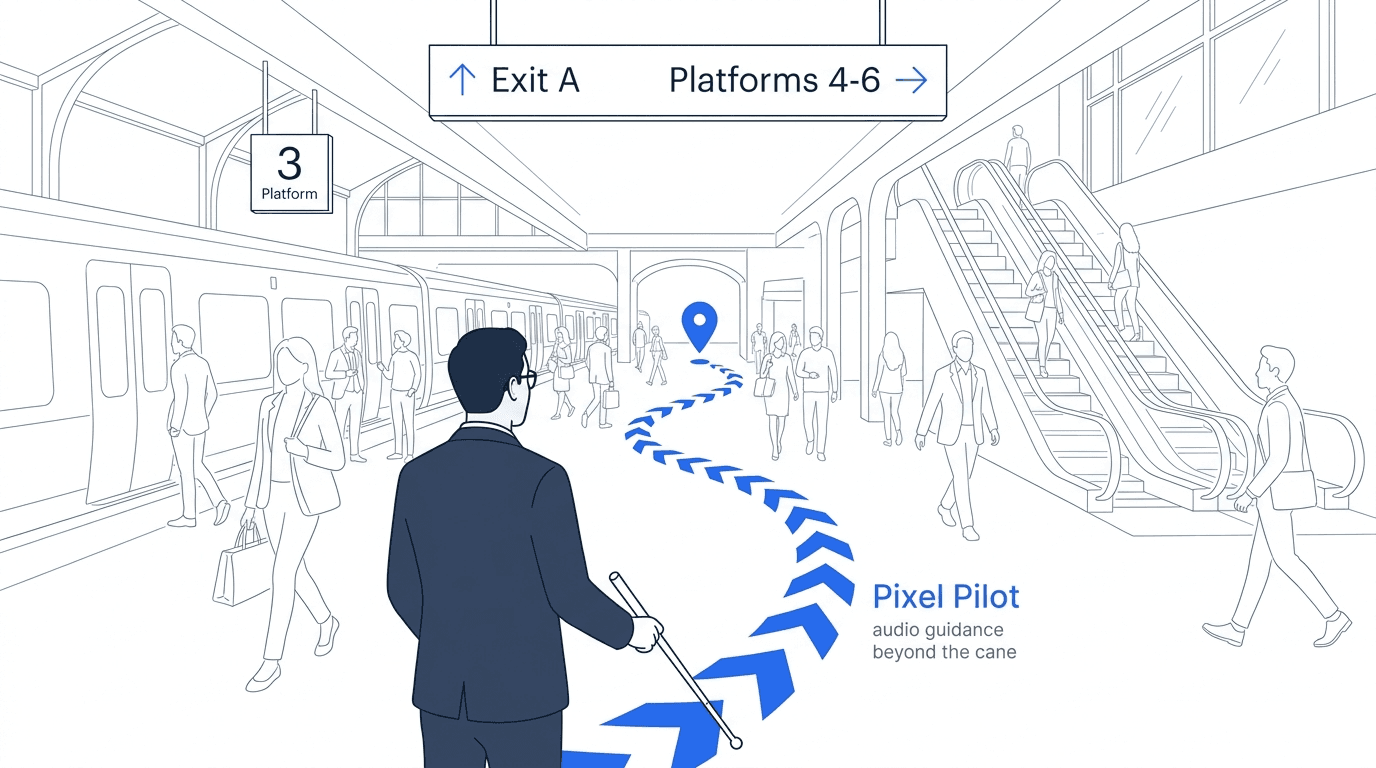
Pixel Pilot never replaces the white cane. It works alongside it: the cane covers the next step, Pixel Pilot everything beyond. For partially sighted people who don't use a cane, it fills in exactly what their vision misses.
It is particularly powerful for people with central vision loss, where reading signs becomes impossible long before mobility does.
Built for Munich. Ready for everywhere.
Real stations. Real journeys.
Field-tested with visually impaired users in Munich U-Bahn stations, connected to live MVG departures. Expanding station by station, city by city.

Industry partnership
The prototype works. Now it needs a partner to scale.
We took Pixel Pilot from idea to a working prototype, field-tested with visually impaired users in Munich stations. Bringing it to every patient who needs it takes clinical, technical and commercial infrastructure at a different scale. That is why we are actively looking for industry partners to develop Pixel Pilot further, together with us.
Med-tech & eyewear companies
Add navigation to your low-vision portfolio. Your patients are already asking for it.
Clinics, insurers & associations
Independence as part of care, from rehabilitation to the daily commute.
Transit operators & cities
An accessible network without retrofitting a single station.
Interested? Talk to us directly.
Paulina Möhrle · paulina.moehrle@cdtm.com · CDTM, Munich
blind and severely visually impaired people worldwide
IAPB Vision Atlas
blind and severely visually impaired people in Germany
DBSV
underground stations in Munich, where we start
Our beachhead
The team
Building independence.
Four students at CDTM, the joint innovation institute of TU Munich and LMU.

Paulina
Medicine

Giulia
Business & Computer Science

Simon
Electronic Engineering & Neuroscience

Elena
Human-Computer Interaction
Between the four of us: TU Munich · LMU Munich · Harvard Medical School · Stanford · Bocconi · BMW · Boehringer Ingelheim · Boston Children's Hospital · Kyoto University · Max Planck Society
FAQ
Frequently asked questions.
How does it know where I am underground, without GPS?+
Sensor fusion. Bluetooth beacons and digital map data take over where GPS cannot reach, barometric sensors detect level changes, and the camera confirms your position from the signage around you.
Which glasses does it run on?+
Today, Pixel Pilot runs on Meta smart glasses: camera in, audio out. The system is hardware flexible by design and will move with the smart glasses market.
What happens to the camera footage?+
Everything is processed on the phone. Sign reading and the voice assistant run on-device, and no camera frame is ever uploaded.
Does it replace the white cane?+
Never. The cane covers the next step, Pixel Pilot covers everything beyond it: platforms, crowds, connections. Partially sighted people who don't use a cane get exactly the information their vision misses.
Who benefits most?+
Anyone with a visual impairment looking for extra support. It is particularly powerful for people with central vision loss, which affects the sharp vision needed for reading signs and recognising details.
Where does it work today?+
The working prototype is field-tested in Munich U-Bahn stations including Hauptbahnhof, Marienplatz and Sendlinger Tor, connected to live MVG departures. More stations and cities are on the roadmap.
Early access
Be first to try it.
Pixel Pilot is live with its first test users in Munich. Join the waitlist and we'll reach out as soon as we can take you along.

650,000 people,
independent again.
The default navigation layer for anyone who can't rely on sight.
Partner with us